Is underfloor heating right for your home?

Save energy and enjoy comfort all year round

Are you tired of cold floors and high energy bills during the winter months? Look no further than underfloor heating to transform your home into a cosy haven while saving on energy costs.

Underfloor heating is a revolutionary technology that provides a luxurious and efficient heating solution. By distributing heat evenly across the entire floor, it creates a warm and comfortable environment in every room, eliminating the need for bulky radiators or space-consuming heaters. But that’s not all – underfloor heating also offers significant energy savings, as it operates at lower temperatures than traditional heating systems. This reduces your carbon footprint and helps you cut down on your monthly energy bills.

Say goodbye to chilly mornings and hello to a cosy and cost-effective home. In this article, we will delve into the benefits of underfloor heating and why it’s a smart investment for any homeowner looking to enhance their comfort and save on energy consumption.

How underfloor heating works

Underfloor heating works by using a network of pipes or electric heating elements that are installed beneath the floor surface. These pipes or heating elements are connected to a central control system that allows you to adjust the temperature in each room individually. When the system is activated, warm water or electricity flows through the pipes or elements, heating the floor from below. The warmth then radiates upwards, creating a comfortable and consistent heat throughout the room.

One of the main advantages is its ability to distribute heat evenly across the floor. Unlike traditional heating systems that rely on radiators or heaters that create pockets of warm and cold air, underfloor heating ensures that every inch of the floor is heated to the desired temperature. This eliminates cold spots and drafts, providing a more comfortable and consistent heating experience.

Benefits of underfloor heating

Underfloor heating offers a wide range of benefits that make it an attractive option for homeowners. Firstly, it provides a more comfortable living environment. You no longer have to deal with cold floors in the morning or the discomfort of walking on icy tiles. Instead, you can enjoy the luxury of warm floors that create a cosy atmosphere throughout your home.

In addition to enhanced comfort, underfloor heating also offers improved aesthetics. Without the need for bulky radiators or space-consuming heaters, you have more freedom in designing your living space. You can place furniture wherever you like without worrying about blocking radiators or compromising the flow of heat. This opens up new possibilities for interior design and allows you to create a more visually appealing and functional living environment.

Another significant benefit is its energy-saving potential. By operating at lower temperatures compared to traditional heating systems, underfloor heating can reduce your energy consumption and lower your monthly energy bills. The even distribution of heat across the entire floor means that the system can achieve the same level of comfort as a traditional heating system while using less energy. This not only saves you money but also reduces your carbon footprint.

Energy-saving advantages

Underfloor heating is renowned for its energy-saving advantages. One of the key reasons for this is the lower operating temperatures required, compared to traditional heating systems. While radiators or heaters need to reach higher temperatures to provide sufficient warmth, underfloor heating can achieve the same level of comfort at lower temperatures. This is because the heat is distributed evenly across the entire floor, creating a more efficient and effective heating system.

Lower operating temperatures also mean that the system can take advantage of renewable energy sources. For instance, if you have a heat pump or solar panels installed in your home, you can easily integrate them with your underfloor heating system. This allows you to harness the power of renewable energy to heat your home, further reducing your reliance on fossil fuels and lowering your carbon footprint.

Additionally, underfloor heating eliminates heat loss through walls and windows. With traditional heating systems, warm air rises and can escape through poorly insulated walls and windows. This results in heat loss and energy wastage. However, with underfloor heating, the heat radiates from the floor upwards, minimizing heat loss and ensuring that the heat stays where it’s needed the most – in your living space. This not only improves the overall efficiency of the heating system but also helps you save on energy costs.

Increased comfort

One of the main reasons homeowners opt for underfloor heating is the enhanced comfort it provides. Unlike traditional heating systems that create pockets of warm and cold air, underfloor heating ensures that every inch of the floor is heated to the desired temperature. This eliminates cold spots and drafts, creating a more comfortable and pleasant living environment.

Underfloor heating also offers the benefit of radiant heat, which is considered to be the most comfortable form of heating. Radiant heat warms objects and people directly, rather than heating the air like traditional heating systems. This means that even if there are drafts or open windows, you will still feel warm and comfortable as the heat is radiating from the floor upwards.

Furthermore, underfloor heating allows for zoned heating, which means you can adjust the temperature in each room individually. This is particularly beneficial if you have different heating preferences for different areas of your home. For example, you may want your living room to be warmer than your bedroom. You have the flexibility to set different temperatures for each room, ensuring optimal comfort throughout your home.

Underfloor heating for all seasons

While underfloor heating is known for its ability to keep your home warm and cosy during the winter months, it can also be used to cool your home during the summer. Some systems have the option to switch to a cooling mode, allowing you to enjoy a comfortable indoor temperature all year round.

During hot summer days, underfloor cooling can provide a refreshing and pleasant experience. The system works by circulating cool water through the pipes or using a heat pump to extract heat from the floor, creating a cooling effect. This eliminates the need for air conditioning units or fans, saving you money on energy costs and reducing your environmental impact.

Types of underfloor heating systems

There are two main types of underfloor heating systems: water-based and electric. Water-based systems, also known as hydronic systems, use hot water from a boiler to heat the floor. This type of system is typically more expensive to install but offers more efficient and consistent heating.

Electric underfloor heating systems, on the other hand, use electric heating elements to generate heat. These heating elements are installed beneath the floor and connected to a thermostat for temperature control. Electric systems are generally more affordable and easier to install, making them a popular choice for retrofitting existing homes or smaller spaces.

When choosing the type of system that’s right for you, it’s essential to consider factors such as your budget, the size of the space you want to heat, and your heating preferences. Our consultants can help you determine the best system for your specific needs.

Installation considerations

Before installing underfloor heating, there are several factors to consider to ensure a successful and efficient installation. Firstly, it’s important to assess the suitability of your existing flooring. Underfloor heating can be installed beneath a variety of flooring materials, including tile, stone, laminate, and carpet. However, certain flooring types may require additional insulation or adjustments to accommodate the heating system.

Additionally, it’s crucial to properly insulate your home to maximize the efficiency of underfloor heating. Good insulation helps retain the heat generated by the system, preventing heat loss and reducing energy wastage. This can be achieved through insulation materials such as foam boards or reflective foil, which are installed beneath the heating system.

Another important consideration is the type of control system you choose. Various options are available, including manual thermostats, programmable thermostats, and smart thermostats. Manual thermostats allow you to manually adjust the temperature, while programmable thermostats allow you to set different temperatures for different times of the day. Smart thermostats offer even more advanced features, such as remote control through a smartphone app and integration with other smart home devices

Maintenance and care tips for underfloor heating

Once your underfloor heating system is installed, it’s important to maintain and care for it to ensure optimal performance and longevity. Here are some maintenance tips to keep in mind:

1. Regularly check the system for any leaks or damage. If you notice any issues, contact our team to assess and repair the system.

2. Keep the floor clean and free from any debris or obstructions. This will ensure that the heat can radiate evenly throughout the room.

3. Avoid placing heavy furniture directly on top of the heating elements or pipes, as this can damage the system. Use furniture pads or rugs to provide insulation and protect the floor.

4. Follow the manufacturer’s guidelines for temperature settings and avoid setting the temperature too high, as this can increase energy consumption and potentially damage the system.

5. If you have a water-based system, have it serviced regularly to ensure that the boiler and pipes are in good working condition. This will help prevent any issues and maintain the efficiency of the system.

By following these maintenance tips, you can prolong the lifespan of your underfloor heating system and ensure that it continues to provide you with comfort and energy savings for years to come.

Conclusion: Why underfloor heating is a smart investment for your home

Underfloor heating offers a range of benefits that make it a smart investment for any homeowner. From enhanced comfort and improved aesthetics to significant energy savings and year-round heating and cooling capabilities, underfloor heating provides a luxurious and efficient heating solution for your home.

By distributing heat evenly across the entire floor, underfloor heating eliminates cold spots and drafts, creating a more comfortable and pleasant living environment. It also allows for zoned heating, giving you the flexibility to adjust the temperature in each room individually.

Moreover, underfloor heating operates at lower temperatures than traditional heating systems, resulting in significant energy savings. This reduces your carbon footprint and helps you cut down on your monthly energy bills. With the option to integrate underfloor heating with renewable energy sources, you can further reduce your reliance on fossil fuels and contribute to a more sustainable future.

Whether you’re building a new home or renovating your existing space, underfloor heating is a smart investment that will enhance your comfort, save you money, and provide you with a cozy haven all year round. Say goodbye to chilly floors and hello to the warmth and luxury of underfloor heating.


To find out more or speak to a member of our specialist team, contact us via the website or give us a call on 01202 894976.

How will changes to Part L affect underfloor heating?

The upcoming changes to Part L Building Regulations come into force in June 2022 and are the first step in the Government’s plan to deliver zero carbon ready homes by 2025. All new homes will be expected to produce 31% less CO2 emissions compared to current standards.

What does this mean for new heating systems?

Under the new Part L regulations, any new heating system will need to be designed with a maximum flow temperature of 55°C and have self-regulating, zoned, control devices. Whilst there are several methods to achieve these targets and a focus on renewable energy sources, there is the expectation that heat pumps will become the no.1 driver for primary heating technology for new homes.

Heat pumps with underfloor heating will be a key driver in delivering zero carbon ready homes.
Good news for Underfloor Heating.

All Mercury wet underfloor heating systems that we design, supply and install will easily comply with the new Part L revision and also provide other benefits.

Underfloor heating generates ambient temperature over a greater surface area than traditional radiators. Systems are designed by our in-house team to run at a lower temperature (35-55°C rather than 80°C for gas boilers), for 24 hours a day for maximum efficiency. This means that the underfloor heating system can accommodate the optimal coefficient of performance (COP) for heat pumps, which is achieved when they run at 35°C. Underfloor heating can also be zoned and controlled by a number of modern heating controls, which ticks a crucial regulatory box.

It is important to design and install a heat pump system that delivers maximum efficiency. The Regulatory Assistance project reports the lifetime cost of a heat pump for a UK home is now about the same as a gas boiler for the first time, making this more attractive for millions of households concerned about souring bills. Further savings can be made via the new Boiler Upgrade Scheme launched on the 1st of April 2022 which provides a £5,000 – £6,000 grant, depending on whether an air source or ground source heat pump is specified, for sufficiently insulated homes and zero VAT for eligible households. Find out more about the scheme here.

Control heating via an app
Modern heating controls can help to keep energy usage as efficient as possible.
Value for homeowners.

Along with compliance with the coming changes to Part L and thermal comfort, installers can also promise homeowners that they will benefit from reduced running costs.  An underfloor heating system will be between 15% and 40% cheaper to run compared to traditional radiators. It will also require very little maintenance and with a 50-year guarantee supplied with all Mercury pipework, households can be reassured that the system will run smoothly.

Aside from future-proofing new properties in line with the incoming Part L revisions, professionally installed underfloor heating offers safety, health, and wellbeing benefits.  Underfloor heating offers design freedom, radiators become a thing of the past, freeing up precious wall and floor space. Health benefits include relief for asthma sufferers, studies show a reduction in dust particles by a huge 80% which is good news for the 60% of UK residents who say dust mites trigger their asthma symptoms (Asthma.org.uk).

There’s also a relief for arthritis sufferers, whose symptoms in their feet, ankles and legs can be alleviated by the constant, ambient temperature provided by an underfloor heating system.

Underfloor heating is safe, preventing injury and burns often associated with radiators.
How UFHN can help.

As the industry strives toward providing energy-efficient solutions and technologies to meet the Government’s green agenda, we are uniquely positioned to help meet regulatory changes by offering advice and system design expertise. We can also supply a range of systems and products to comply with the latest regulations, or even help with installation. Give the team a call on 01202 894976, email sales@ufhn.co.uk or send in your plans via our contact us page and we’ll be happy to help.

5 reasons to love underfloor heating

There’s no doubt that our winters are getting colder and if the thought of Spring is leaving you with that warm, fuzzy feeling, perhaps a professionally designed and installed underfloor heating system can help to turn up the heat in your property.

Whether you choose warm water or an electric system, here’s 5 reasons why we love underfloor heating!

Design Freedom

If you’re thinking of a property renovation, extension or new-build, underfloor heating can offer you the design freedom that you’ve never had before. As heat will be radiating from beneath the floor, radiators can become a thing of the past, freeing up precious wall and floor space, allowing you to furnish and decorate exactly how you want.

You can also decide whether you want underfloor heating in just one room, or throughout the property. There’s a wide range of floor coverings that can be installed over the top including wood, tile, stone and even carpet, as long as the tog level isn’t too thick.

From an installation point of view, there are a number of floor systems that can be considered depending on whether the pipework is to be laid within screed, placed on top of solid timber of floated over joisted floors. Screed is often the most popular option for a new build, however, if it’s a renovation and you are limited with floor-to-ceiling height space then there are well-performing low profile options available. Also, with new product development, UFHN can significantly reduce installation time by offering systems that don’t need screed, meaning that your next underfloor heating installation can be easier than you think!

Ealing Filmworks, London
Ealing Filmwork
Healthy homes

Underfloor heating has many health benefits and is considered a safe option for people who suffer from breathing difficulties or dust allergies. Radiators can exacerbate these conditions as they use convection currents that move air in a circular motion, redistributing dust particles, which then float freely making them easier to breathe in.

Underfloor heating gently heats a room via radiation (no, not that kind!) which means there is far less air movement for dust particles. Studies show a reduction in dust particles by a huge 80% which is good news for the 60% of UK residents who say dust mites trigger their asthma symptoms (Asthma.org.uk).

There’s also a relief for arthritis sufferers, whose symptoms in their feet, ankles and legs can be alleviated by the constant, ambient temperature provided by an underfloor heating system.

Safety

We all know that radiators can get very hot. Whether it’s a family home, elderly care facility, nursery or workplace, underfloor heating can provide a safe option in all settings by eliminating the risk of burns or injury from radiators.

Saving you money

Whilst the outlay for underfloor heating will cost more than a traditional radiator system, the long-term benefits far outweigh the initial investment. How and where you heat the property can be managed easily with smart heating control and as we mentioned earlier, underfloor can be used in some rooms and not in others and can also connect to an existing boiler system.

There are many variables that will determine the cost of running an underfloor heating system from insulation to glazing and when calculated properly will improve overall EPC ratings. Whilst every system and property is different, underfloor heating is a proven efficient heating solution which can provide savings ranging from 15% – 40% against traditional heating methods.

Compatible with heat pumps

Underfloor heating is commonly connected to gas boiler systems, however, we are seeing significant demand for heat pumps and the government are hoping to achieve a staggering 600,000 installations every year by 2028. This low-carbon initiative is the result of the ban of gas boiler installations into new homes by 2025.

It is well documented that underfloor heating and air source heat pumps are the ideal partnership for heating a property. Air source heat pumps become more efficient when operated at lower temperatures, same for a well-designed and installed underfloor heating system. The two systems working in harmony is a very desirable option for many homes, not to mention environmentally friendly.

The Government’s Renewable Heat Incentive Scheme is coming to a close for new applicants on the 31st March 2022 and will be directly replaced by the Green Heat Grant scheme (or boiler upgrade scheme), a proposal to provide eligible homeowners with grants of up to £5000 for the purchase of Air source heat pumps or £6,000 for ground source heat pumps.

Now is the ideal time to speak to us about your next underfloor heating system. We can manage your project all under one roof, from expert design, supply, installation, commissioning and service options and cover all parts of the UK, from the South West up into the North.
We look after your underfloor heating so you don’t have to!
Call us on 01202 894976 or email sales@ufhn.co.uk.

How do air source heat pumps work with Underfloor heating?

If you’re already thinking about your next underfloor heating install, read our guide below to see why combining an air source heat pump with underfloor heating is the way forward for a low-carbon, energy-efficient method of heating.

The way we heat our homes is going to significantly change over the next few years in response to the Government’s Green 10 point plan, to achieve a ‘net zero’ level by 2050. So what does this actually mean?

We know it’s virtually impossible to remove all emissions. However, there are several eco-friendly steps that we can all make to reduce the amount of man-made greenhouse gas emissions, which will result in a positive impact on the future of global warming.

Around 14% of UK greenhouse gas emissions come from homes using gas boilers, and from 2025 there will be a ban on installing gas boilers into any new-build home. Therefore low-carbon alternatives such as heat pumps will be a common sight throughout the UK over the coming years and beyond.

How do Air Source Heat Pumps Work?

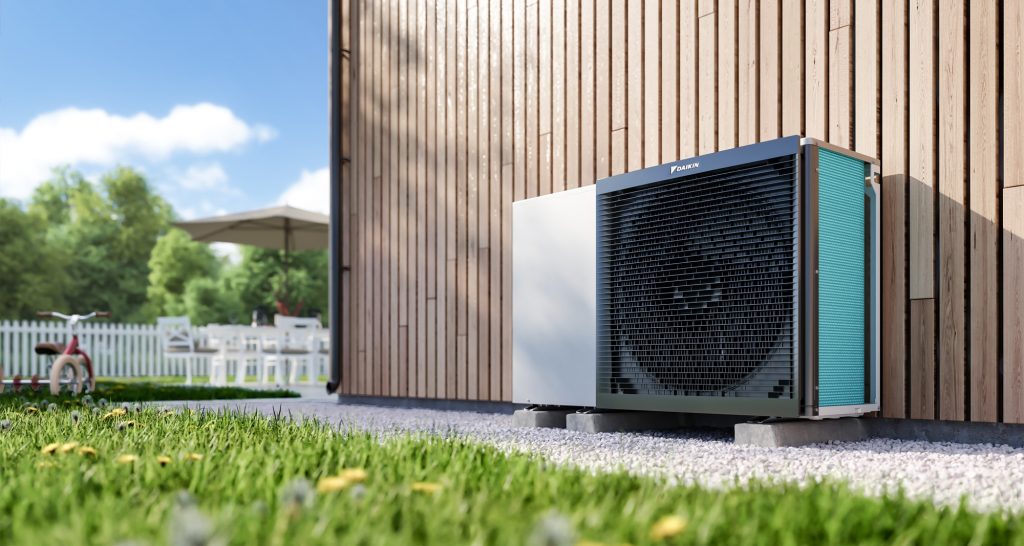
Air source heat pump’s (ASHP’s) absorb heat from the outside air to heat a home and hot water. Even if the temperature dips to as low as -15°c, they can still extract heat. Now, they do need electricity to run, however, as they are extracting renewable heat from the environment, the heat output is greater than the electricity input. This makes them an energy-efficient method of heating a home.

In a nutshell, the heat from the air is absorbed at low temperatures into a fluid. This fluid passes into a compressor, increasing the temperature where it is transferred to the heating and hot water circuits of the property.

You’ll be looking at an air-to-water system as heat pumps work more efficiently at a lower temperature than a standard boiler system would. This is why it makes them suitable for underfloor heating systems which give out heat at lower temperatures, for a longer period of time.

Something else to consider is whether the property has sufficient insulation. Since air source heat pumps work best when producing heat at a lower temperature, it’s important to be draught-proof to minimise any heat loss that may occur.

Save Money & Energy

If you’re looking to optimise the efficiency of an underfloor heating install, an air source heat pump is the ideal partner.

As we have touched on above, the efficiency of a heat pump increases as the required flow temperature decreases. So, the cooler the system is run the less it’s going to cost!

For every unit of energy an air source heat pump uses to extract from the air, it typically outputs 3X more as heat, meaning air source efficiency is around 300%. Underfloor heating operates at lower temperatures of 35-55°c over a longer period of time, so combining the two systems together, enhances the performance of the air source heat pump and ultimately will provide cost savings overall.

In addition to the benefits of reduced running costs, households may also be able to make money through the Renewable Heat Incentive scheme which offers quarterly payments for the amount of clean, green renewable energy the system produces.

Quiet and unobtrusive

Air source heat pumps come in all shapes and sizes and newer models are significantly quieter than their predecessors. More of our recent projects have used the ultra-quiet Mitsubishi Ecodan 11.2 Kw air source heat pumps, one of the only heat pumps on the market with the compressor being double housed in an acoustic casing, loose fitted to stop any vibration on silicone feet. This unit is a must for clients with any concerns about noise. Find out more here.

You will need space outside of the property to ensure that the unit can either be fitted to a wall or placed on the ground and as a general rule the larger the property, the larger the heat pump. The external unit is connected to an internal unit containing circulation pumps and hot water, which is smaller than the average boiler.

Full Control

The hub of the heating system is inevitably the control, using it properly will ensure that it works to its full potential. With a huge choice on the market it does come down to preference, however the more intelligent the control, the easier it is to operate and ensure all the components of the heating system from the heat pump to the underfloor heating are working efficiently.

Choose from programmable, smart and wiFI enabled versions and we will, of course, recommend the best control for the system design. To view our range of thermostats, click here.

UFHN Whole House heating design service

At UFHN, we offer a partnership programme providing turnkey solutions for whole-house heating design, supply and commissioning. By partnering with leading manufacturers of heat pumps, we can ensure that the specification is suitable for the type of property and incorporate this into the design and calculation of our award-winning underfloor heating systems. We want you to know that you’ll be in safe hands by providing you with this unique service all under one roof.

For more information about how we can help you to integrate renewable technology into your next underfloor heating project, give us a call on 01202 894976 or contact us via the website at www.ufhn.co.uk